
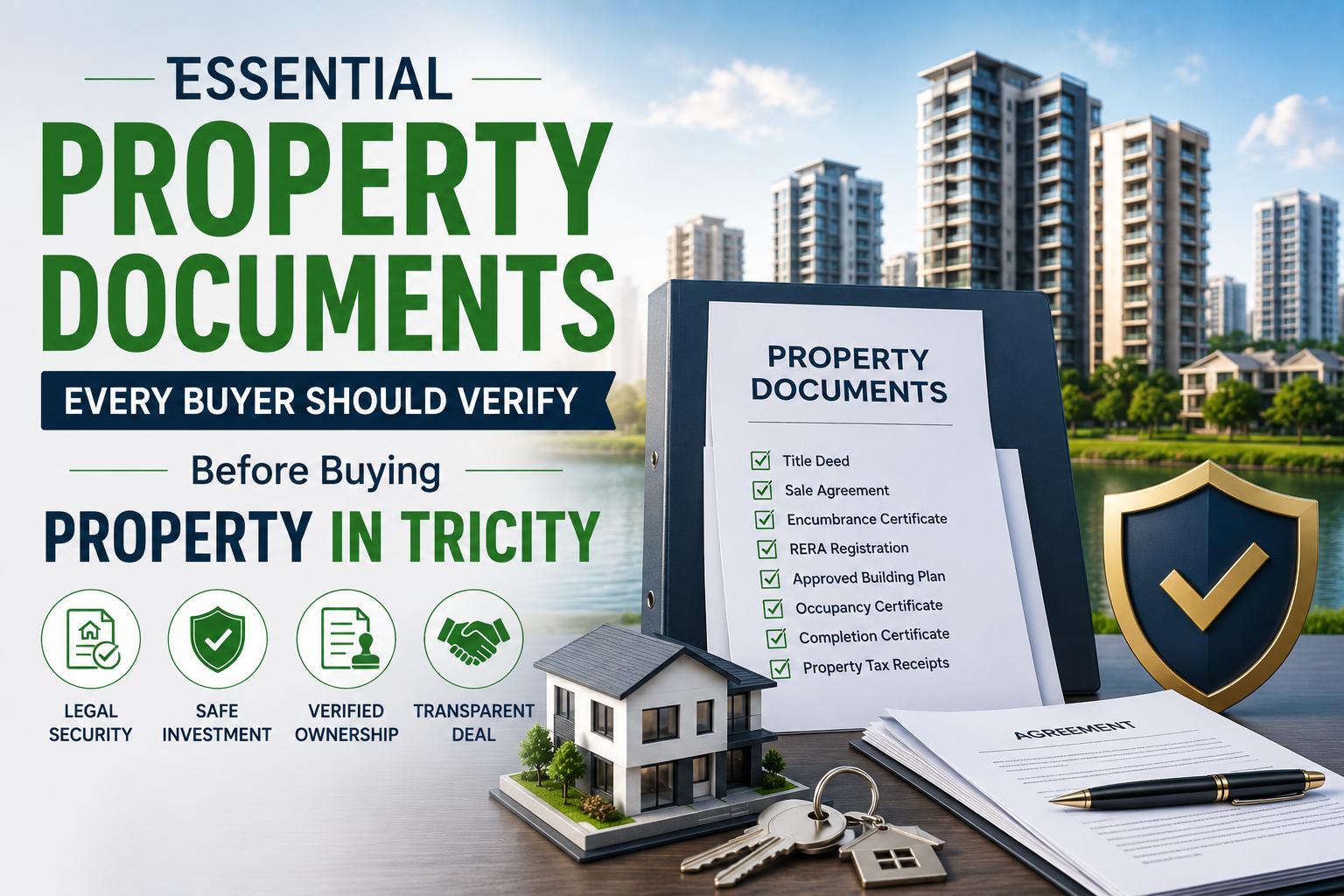
Essential Property Documents Every Buyer Should Verify Before Buying Property in Tricity
Buying a home is one of the biggest financial decisions you’ll ever make. While location, budget, and amenities are important, verifying legal documents is equally essential. Many property disputes happen because buyers overlook paperwork or assume everything is in order.
If you’re planning to buy Property in Tricity, taking time to verify the right documents can help you avoid legal issues, financial losses, and unnecessary stress.
This guide explains the essential property documents every buyer should check before making a purchase.
Why Document Verification Matters Before Buying Property in Tricity
Property documents prove ownership, confirm legal approvals, and ensure the property is free from disputes. Even if a project looks attractive or offers competitive pricing, incomplete documentation can create problems later.
For anyone purchasing Property in Tricity, verifying documents is one of the smartest steps before signing any agreement.
Title Deed: The Most Important Property Document
The Title Deed establishes the legal ownership of a property.
Before buying, ensure:
- The seller is the legal owner.
- Ownership history is clear.
- There are no ownership disputes.
- The seller has the legal right to transfer the property.
A clear title is the foundation of a secure property transaction.
Sale Agreement
The Sale Agreement outlines the terms and conditions agreed upon by both the buyer and seller.
It generally includes:
- Property details
- Agreed purchase price
- Payment schedule
- Possession timeline
- Responsibilities of both parties
Read every clause carefully before signing.
Encumbrance Certificate
An Encumbrance Certificate (EC) confirms whether the property has any outstanding loans, mortgages, or legal liabilities.
A clean EC indicates that the property is free from financial claims during the specified period.
This document provides additional confidence before completing the transaction.
RERA Registration Certificate
If you’re purchasing a newly launched or under-construction project, always verify its RERA registration.
RERA promotes transparency by requiring developers to disclose project approvals, timelines, and other important information. Taking a few minutes to understand the legal safeguards available to homebuyers before investing can help you make a more informed decision and reduce unnecessary risks.
Approved Building Plan
Always verify that the construction matches the approved building plan issued by the local authority.
This helps ensure that:
- The project follows approved layouts.
- Construction complies with regulations.
- There are no unauthorized structural changes.
Unauthorized construction may lead to legal complications in the future.
Occupancy Certificate (OC)
The Occupancy Certificate confirms that the completed building complies with applicable construction regulations and is fit for occupation.
If you’re purchasing a ready-to-move property, ask the seller or builder to provide this document before finalizing the deal.
Completion Certificate (CC)
A Completion Certificate is issued after authorities confirm that the project has been completed according to the approved building plan.
This document is particularly important for newly completed residential projects.
Property Tax Receipts
Ask for the latest property tax receipts.
These receipts help verify:
- Tax payments are up to date.
- No outstanding municipal dues exist.
- Property records are properly maintained.
Pending taxes may create unnecessary complications for future owners.
Identity and Ownership Documents
Buyers should also verify the identity of the seller along with supporting ownership records.
Check documents such as:
- Government-issued identity proof
- PAN card
- Address proof
- Previous ownership documents, if applicable
These records help confirm the authenticity of the transaction.
Don’t Forget Due Diligence Beyond Documents
Legal documents are essential, but they are only one part of the buying process.
It is equally important to carefully evaluate every important factor before purchasing Property in Tricity, including the neighbourhood, infrastructure, future development plans, builder reputation, and overall market conditions.
You should also ask practical questions before making your final property decision, such as maintenance charges, possession timelines, hidden costs, and resale potential. Combining document verification with thorough research leads to a much safer investment.
If your goal is long-term appreciation, it also helps to understand how local real estate trends influence future property value, especially when comparing different areas across Tricity and nearby cities.
Conclusion
Verifying property documents is one of the most important steps in buying a home. Documents like the Title Deed, Sale Agreement, Encumbrance Certificate, RERA Registration, Occupancy Certificate, and Completion Certificate help ensure that your investment is legally secure and financially sound.
Whether you’re buying your first home or investing in Property in Tricity, taking time to verify every document can prevent costly mistakes later. At Master Yards, we believe informed buyers make confident decisions, and proper legal verification should always be part of every property purchase.