

Property in Tricity: City Living vs Suburban Living
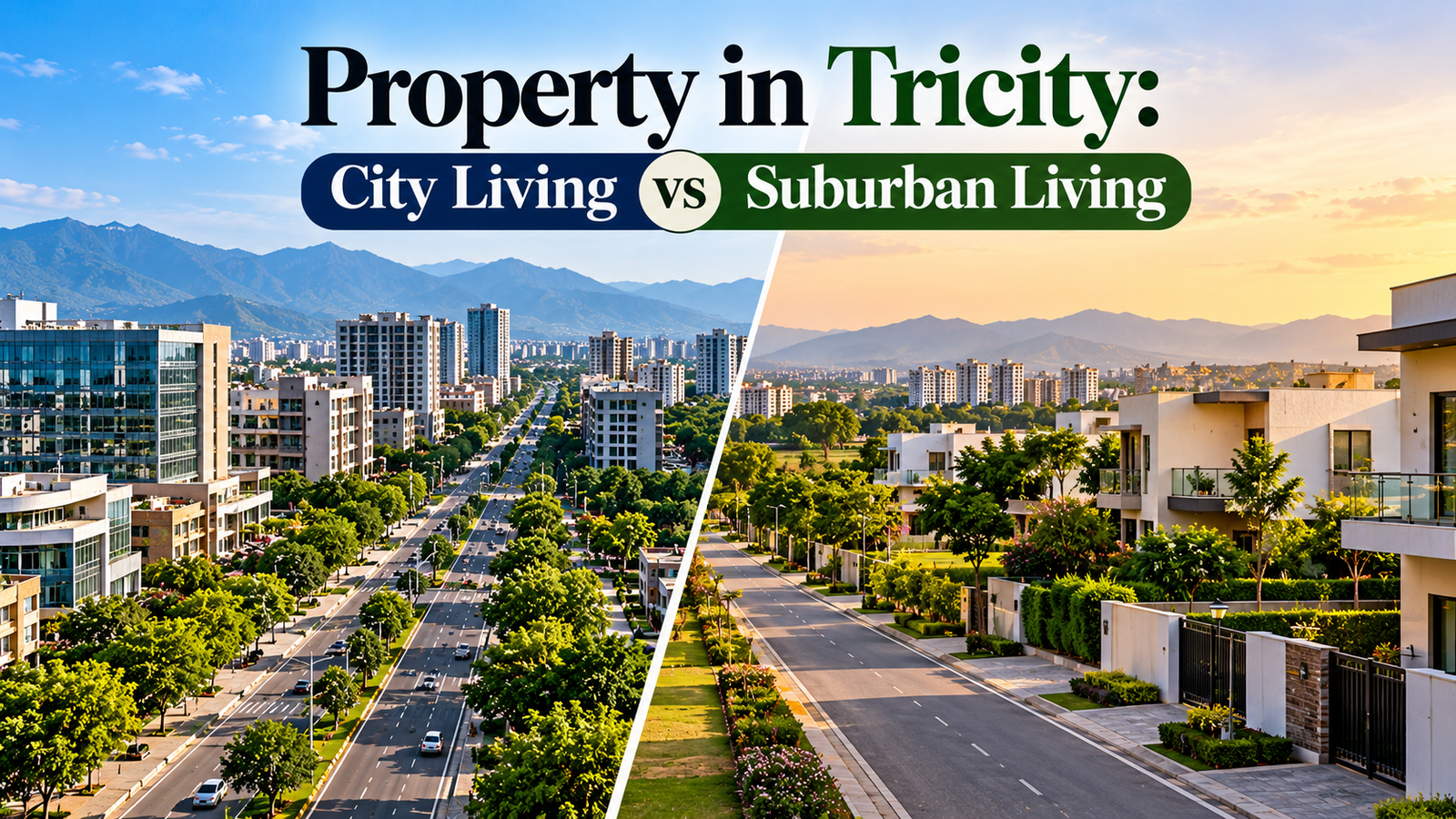
Choosing where to live is often just as important as choosing the home itself. Some buyers prefer the convenience and established infrastructure of city life, while others value larger homes, quieter surroundings, and more space in suburban areas.
When exploring Property in Tricity, this choice becomes particularly relevant. Chandigarh, Mohali, Panchkula, Zirakpur, Kharar, and New Chandigarh offer different living environments, so the right option depends on your budget, daily routine, family needs, and long-term plans.
This guide compares city and suburban living to help you understand which environment may fit your requirements better.
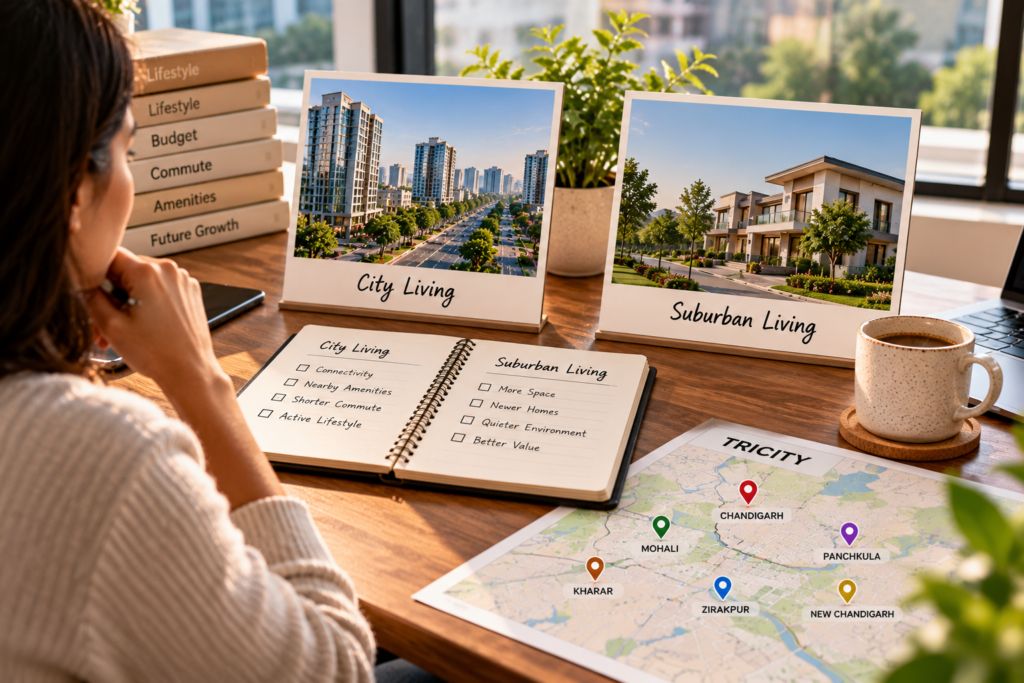
What Does City Living Mean in the Tricity Region?
City living generally means staying closer to established commercial areas, workplaces, schools, healthcare facilities, markets, and public services.
Chandigarh is a clear example of planned urban living. Its planned sector-based layout includes residential areas, roads, and green spaces designed to support everyday needs.
For many buyers, the biggest advantage is convenience. Daily needs may be easier to access, and commuting to central locations can be simpler depending on where you work.
However, properties in established urban locations can come with higher prices. Buyers may have to compromise on property size, age, or certain amenities to stay within their budget.
What Does Suburban Living Offer?
Suburban areas generally sit outside the more established city centres and can include developing residential communities, newer sectors, and areas on the outskirts of major urban locations.
In the Tricity region, areas around Mohali, Kharar, Zirakpur, and New Chandigarh offer different examples of suburban-style living.
One of the main attractions can be the availability of newer residential projects and comparatively more space at certain price points. Buyers may also find larger apartments, independent floors, or houses that may be difficult to find at the same budget in a central location.
The trade-off can be longer travel times, developing infrastructure, or fewer established facilities in some pockets.
Property in Tricity: How Does Budget Change Your Choice?
Budget plays a major role in deciding between city and suburban living.
In a central location, the same budget may provide a smaller apartment or an older property. In a suburban area, it may provide a larger home or a newer development.
This does not mean that one option is automatically better. It depends on what you value more.
If space is your priority, a suburban location may give you more choices. If proximity to work, schools, and established facilities matters more, paying more for a well-connected location may make sense.
You can also compare how the same budget can translate into different property options across the Tricity region before making a decision.
How Does Daily Commute Affect City vs Suburban Living?
Your daily commute should be one of the first things you evaluate.
A larger home farther from your workplace may initially look attractive, but spending significantly more time travelling every day can affect your routine.
Before selecting a suburban property, check:
- Distance from your workplace
- Peak-hour travel time
- Availability of major connecting roads
- Public transport options
- Access to schools and healthcare
- Distance from regular shopping areas
Similarly, living in a city does not automatically guarantee a short commute. Traffic and the exact location of your home and workplace still matter.
Try visiting your shortlisted areas during both normal and peak hours before making a final decision.
Space and Property Options
Space is another important difference between city and suburban housing.
Established urban locations may have limited availability and higher land values. As a result, buyers may need to consider apartments or smaller homes.
Suburban areas can sometimes provide a wider choice of larger apartments, independent floors, villas, or plotted developments.
However, space should not be considered in isolation. A larger home may require more maintenance and could involve higher travel costs.
The best choice is the one where the available space matches how you actually plan to use it.
If you are unsure about the right home size, you can compare different home types based on family size, lifestyle, and future requirements.
Amenities and Everyday Convenience
City locations usually benefit from established access to everyday facilities. Markets, schools, hospitals, restaurants, banks, and recreational spaces may already be available nearby.
Suburban communities can also offer modern amenities, particularly in newer residential developments. These may include landscaped areas, gyms, clubhouses, children’s play areas, security, and parking.
But buyers should look beyond the amenities listed in a project brochure. Check what is actually available nearby and whether the facilities are convenient for your daily routine.
Understanding the features modern homebuyers commonly consider important can help you create a practical checklist.
Which Option Works Better for Families?
Families often need to balance several requirements at once.
Parents may prioritise schools and healthcare, while children may benefit from parks and recreational spaces. Working parents may give greater importance to commute time and connectivity.
A suburban home can offer more living space, which may be useful for a growing family. At the same time, an established city location can make everyday errands and access to essential services more convenient.
This is why there is no universal answer for families. You need to consider how the location fits your family’s actual routine.
You can also understand the factors that are making different Tricity locations attractive to family buyers while comparing your options.
Property in Tricity: What About Future Development?
Future development is another factor worth considering, particularly when looking at suburban areas.
A developing location may see improvements in roads, commercial spaces, public facilities, and residential infrastructure over time. However, buyers should not base a purchase entirely on future expectations.
Look at what is available today and then consider planned development as an additional factor.
For city properties, the infrastructure is generally more established, but there may be less room for large-scale expansion within already developed neighbourhoods.
The important thing is to separate confirmed infrastructure from assumptions about what may happen in the future.
How to Decide Between City and Suburban Living
A simple comparison can help:
| Factor | City Living | Suburban Living |
| Connectivity | Usually established | Varies by location |
| Property size | May be more limited | Can offer more choices |
| Budget flexibility | Can be more challenging | Often offers wider options |
| Amenities | More established nearby | Varies by development |
| Commute | Can be shorter for central workplaces | May be longer |
| Environment | More active and urban | Often quieter |
| Future development | More established | Can have greater scope |
The right choice depends on which factors matter most to you.
It is also important to remember that the price of a property is only one part of its overall suitability. Location, commute, maintenance, space, amenities, and future requirements should all be considered together.
Conclusion
Both city and suburban living have their own advantages and trade-offs. City living can provide established infrastructure and everyday convenience, while suburban areas may offer more space, newer housing options, and a quieter residential environment.
When comparing Property in Tricity, avoid choosing a location simply because it is cheaper or closer to the city centre. Think about your daily routine, family requirements, commute, preferred home type, and how long you expect to stay there.
A practical comparison of these factors can help you find a home that fits your lifestyle rather than simply fitting your budget. MasterYards can be part of your research as you explore different residential options across the Tricity region.