

Freehold vs Leasehold Property in Tricity: What’s the Difference?
Buying a property involves much more than choosing the right location or negotiating the price. One of the most important legal aspects every buyer should understand is whether the property is freehold or leasehold. Although these terms are common in real estate, many first-time buyers are unsure about what they actually mean.
If you’re planning to invest in property in Tricity, understanding the difference between freehold and leasehold ownership can help you make a smarter and more informed decision. Both ownership types have their own advantages, responsibilities, and legal implications.
This guide explains everything you need to know in simple language before purchasing a property.
Why Ownership Type Matters When Buying Property in Tricity
Ownership type directly affects your legal rights, long-term control over the property, resale opportunities, and future investment potential.
Whether you’re buying a residential apartment, an independent house, or a plot, knowing the ownership structure helps you avoid confusion later.
Before finalizing Property in Tricity, it’s important to understand exactly what rights come with the property you’re purchasing.
What is Freehold Property?
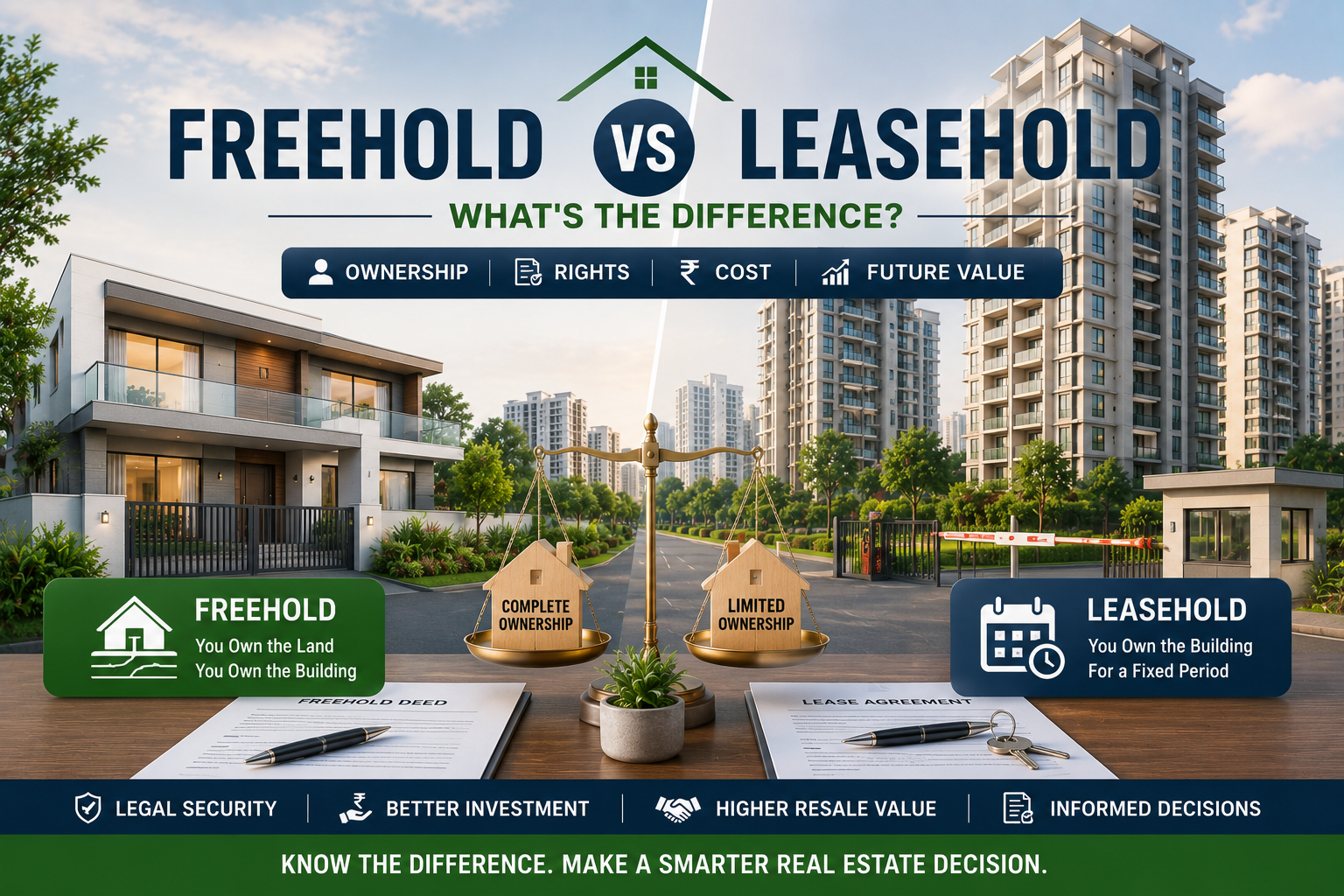
A freehold property gives the buyer complete ownership of both the building and the land on which it is constructed.
As the owner, you generally have long-term rights over the property, subject to applicable laws and local regulations.
Advantages of Freehold Property
- Complete ownership of land and building
- Easier resale process
- Better long-term investment potential
- Greater flexibility for future modifications, subject to local approvals
- Often preferred by buyers and financial institutions
Because of these benefits, freehold properties are often considered attractive for long-term ownership.
What is Leasehold Property?
A leasehold property means the buyer owns the property for a fixed lease period, while the land remains owned by another party, such as a government authority or private landowner.
The lease period may vary depending on the agreement.
After the lease expires, renewal terms depend on the applicable agreement and regulations.
Advantages of Leasehold Property
- Lower initial purchase cost in many cases
- Available in planned developments
- Suitable for buyers with specific budget requirements
- May provide access to well-developed residential projects
However, buyers should carefully understand all lease conditions before making a purchase.
Freehold vs Leasehold: Key Differences
Here are the major differences buyers should understand.
| Feature | Freehold | Leasehold |
| Land Ownership | Buyer owns the land | Land belongs to the lessor |
| Ownership Duration | Permanent | Fixed lease period |
| Resale Flexibility | Generally easier | Depends on lease terms |
| Long-Term Control | Greater | Limited by lease conditions |
| Renewal Requirement | Not applicable | May require renewal |
Understanding these differences makes it easier to choose the ownership type that matches your financial goals.
Which Option is Better for Property in Tricity?
There is no single answer because every buyer has different priorities.
If your goal is long-term ownership and future appreciation, freehold property may be more suitable.
If affordability or a particular residential project is your priority, leasehold property may also be worth considering after carefully reviewing the lease agreement.
The right choice depends on your budget, investment goals, and future plans.
Verify the Legal Documents Carefully
Regardless of ownership type, legal verification should never be skipped.
Before making any payment, always verify the essential legal documents before purchasing Property in Tricity. Checking ownership records, approvals, registration documents, and supporting paperwork helps reduce legal risks and provides greater confidence throughout the buying process.
If you’re purchasing a newly launched or under-construction project, it is equally important to understand how RERA protects homebuyers before making an investment. RERA registration adds another layer of transparency by providing important information about eligible real estate projects.
Don’t Ignore Location and Future Appreciation
Ownership type is only one part of the decision.
You should also choose a location that supports both your lifestyle and long-term investment goals. Factors such as connectivity, neighbourhood development, schools, healthcare facilities, and future infrastructure projects can significantly influence your overall buying experience.
Similarly, understanding which factors contribute to long-term property appreciation can help you evaluate whether a property has strong future growth potential beyond its current market price.
Conclusion
Understanding the difference between freehold and leasehold property helps buyers make more confident real estate decisions. While freehold ownership generally provides greater long-term control, leasehold properties may still be suitable depending on individual budgets, project availability, and future plans.
If you’re planning to invest in property in Tricity, take time to understand the ownership structure, verify all legal documents, and evaluate the property’s long-term potential before making your decision. At Master Yards, we believe informed buyers make smarter investments, and understanding ownership rights is an important step toward a secure property purchase.