
How to Shortlist Properties in Tricity Without Getting Confused
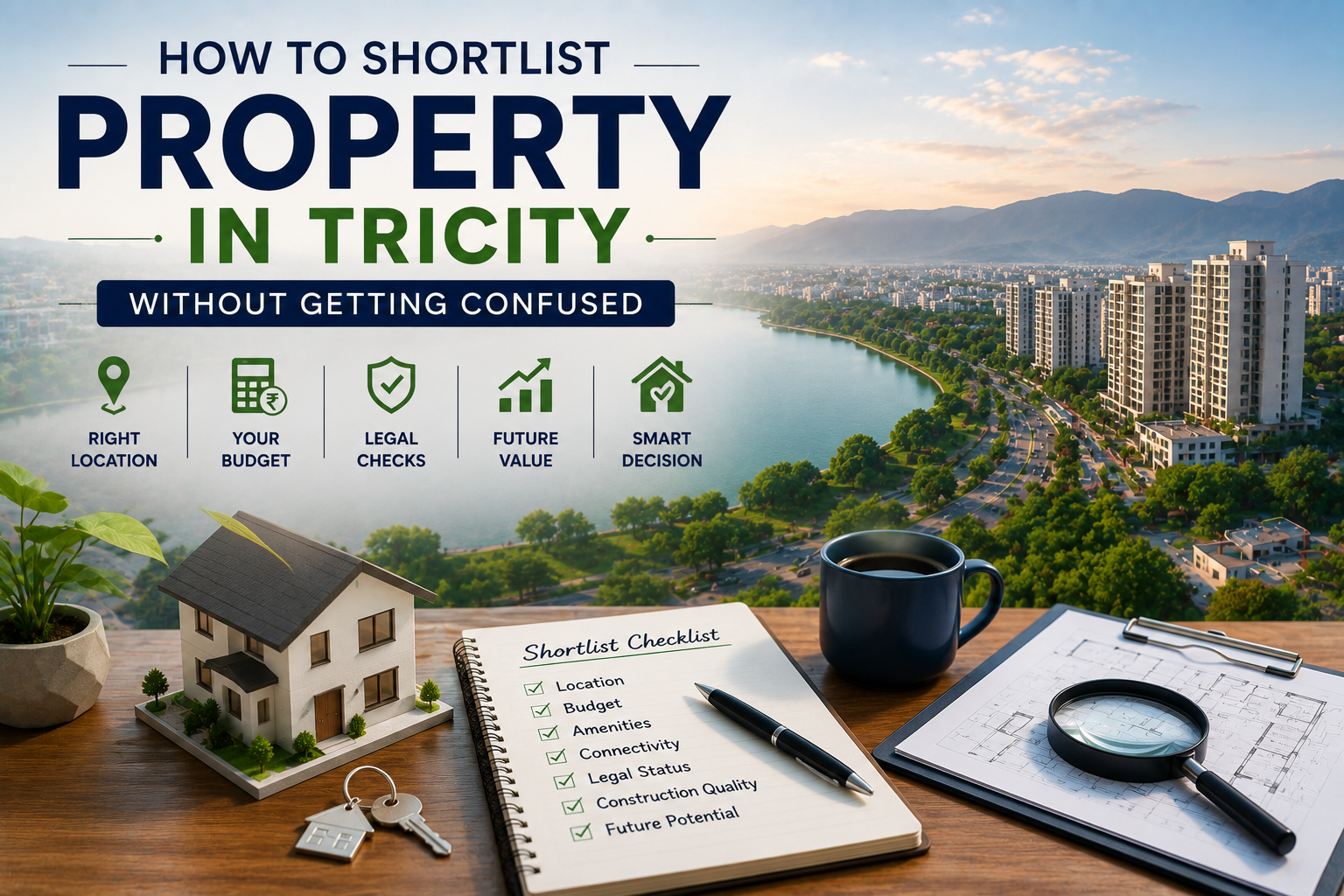
Searching for a home can quickly become confusing when you have too many properties to compare. Different locations, prices, layouts, amenities, builders, and payment plans can make it difficult to decide which option actually suits you.
If you’re looking for Property in Tricity, the best approach is not to visit every available property. Instead, create a simple shortlist based on your budget, requirements, location, legal status, and long-term plans.
This guide explains how to narrow down your choices step by step without getting overwhelmed.
Start With Clear Requirements for Property in Tricity
Before looking at properties, decide what you actually need.
Make a basic list covering:
- Your maximum budget
- Preferred property type
- Required number of bedrooms
- Preferred location
- Distance from workplace or school
- Parking requirements
- Possession timeline
Separate your requirements into two categories: must-haves and nice-to-haves. This immediately removes properties that do not meet your essential needs.
Set a Realistic Budget
Your property budget should include more than the advertised purchase price.
Consider additional costs such as registration, stamp duty, maintenance, parking, interiors, property taxes, and home loan interest.
When comparing Property in Tricity, avoid shortlisting properties that technically fit your loan eligibility but would put excessive pressure on your monthly finances.
A comfortable budget gives you more flexibility and helps prevent emotional buying decisions.
Narrow Down the Right Location
Tricity offers different residential environments across Chandigarh, Mohali, and Panchkula. Instead of comparing the entire region at once, shortlist two or three areas that match your lifestyle.
Consider:
- Daily travel time
- Road connectivity
- Schools and hospitals
- Markets and shopping
- Public transport
- Green spaces
- Future infrastructure
You can also compare the factors that influence whether a location suits your lifestyle and future plans before reducing your options further.
Compare Properties Using the Same Criteria
One of the biggest mistakes buyers make is comparing properties randomly.
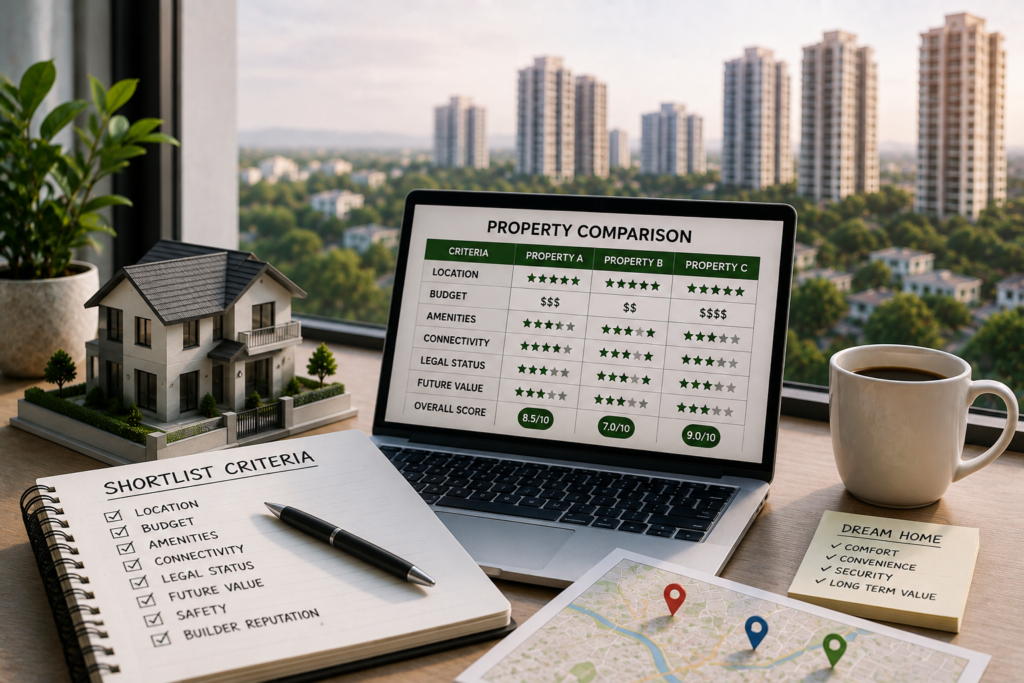
Create a simple comparison sheet and give every property the same criteria:
| Factor | Property A | Property B | Property C |
| Price | |||
| Location | |||
| Size | |||
| Construction | |||
| Amenities | |||
| Legal status | |||
| Future potential | |||
| Maintenance |
This makes differences easier to identify and prevents attractive marketing features from influencing your decision too much.
Look Beyond the Current Property Price
The cheapest property is not always the best option.
Think about how the property may perform over the next five to ten years. Location, infrastructure, connectivity, construction quality, and local demand can all influence resale value.
Before finalizing your shortlist, compare the factors that can influence property value over time.
This helps you evaluate the property as both a home and a long-term asset.
Check Ownership and Property Type
Once you have narrowed your choices, understand exactly what type of ownership comes with each property.
For example, freehold and leasehold properties can involve different ownership rights, responsibilities, and long-term considerations.
Before comparing final options, understand the difference between freehold and leasehold ownership.
This is particularly important when two properties appear similar but have different ownership structures.
Check Legal and Project Details
Never remove legal verification from your shortlist process.
Check ownership documents, approvals, registration details, and other relevant paperwork before moving forward.
For eligible projects, verify RERA information and review the project’s available details.
A property that looks perfect on paper may not be suitable if there are unresolved legal or documentation concerns.
Reduce Your List to Three Properties
You do not need ten final options.
Once you have compared budget, location, property type, legal status, quality, and future potential, reduce your list to around three properties.
Then visit them again with a clear purpose.
Look at the actual surroundings, construction quality, accessibility, noise levels, parking, maintenance, and overall neighbourhood experience.
Make a Final Decision Based on Long-Term Value
At this stage, ask yourself one simple question: Which property offers the best overall balance?
Do not focus only on price or appearance. Consider affordability, location, quality, legal security, future demand, and your personal requirements together.
You can also evaluate what makes a property suitable for long-term investment before making the final choice.
A property that performs well across several important factors is usually a stronger choice than one that excels in only one area.
Conclusion
Shortlisting properties becomes much easier when you follow a fixed process instead of comparing everything at once. Start with your requirements and budget, narrow down locations, compare properties using the same criteria, verify legal details, and then reduce your options to a small final list.
If you’re searching for Property in Tricity, taking a structured approach can save time and help you make a more confident decision. At Master Yards, we believe careful research and realistic evaluation are essential when choosing a property for both present needs and future goals.